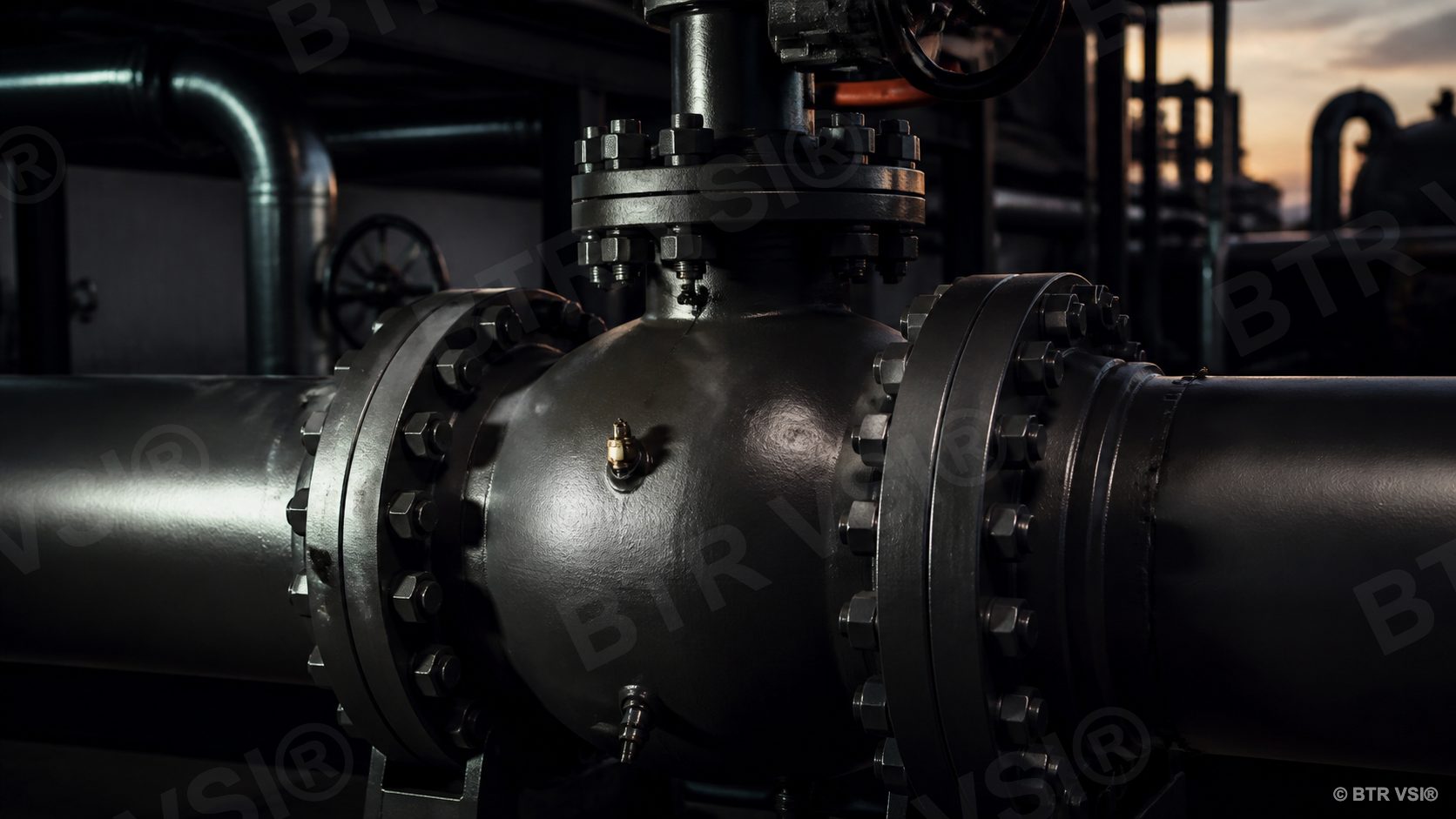
Steam service thins lubricants, washes films with condensate and cycles valve parts through wide temperature swings. Injection suits valves built with injection fittings and designs that accept in-service treatment; it does not suit valves without fittings or services where site rules forbid it. Success is proved by a seat-leak test under agreed conditions, not by observation alone.
Knowledge · Lubrication science
Steam service valves: lubrication and sealing behaviour under heat and condensate
Heat, condensate and thermal cycling change what lubrication and sealing can achieve on steam service valves.
1. What heat and condensate do
Steam service attacks lubrication from several directions at once. Heat thins the lubricant film, so grease can drain off hot metal. Condensate then washes the remaining film from metal surfaces.
Common effects include:
- Heat thins films and speeds ageing of the compound.
- Condensate washes lubricant from stems, seats and bearings.
- Temperature swings move deposits onto sealing surfaces.
- Standing water corrodes stems and trims, adding abrasive debris.
The result is a valve that is stiff, passing at the seat, or both. These signs suggest a lubrication problem, but wear and damage can look the same. The valve lubrication guide covers the general principles.
2. Where injection applies, and where it does not
Injection treatment works only on valves built for it. Ball and gate valves with buttonhead fittings are designed to be maintained in service. Valves without fittings, or with blocked and damaged fittings, cannot be treated online.
Three gates come before any recommendation of cleaner, lubricant or sealant:
- The injection fittings are present and in good condition.
- The valve design and the steam duty suit injection.
- Site rules and the permit-to-work allow the work.
Some steam duties sit outside injection practice, for example lines hot enough to destroy common compounds. Heat also ages packing and seals, so treat the whole valve, not only the seat. Where OEM documentation exists, consult it for limits and warranty terms. The wider argument is set out in injectable compounds versus applied lubrication.
3. Choosing compounds for steam duty
Heat and water rule out general-purpose compounds on steam duty. The base oil thins as temperature rises, so the film must hold at service heat.
The compound must also resist washing by condensate across the seat. A film that survives dry gas may still fail in wet steam.
Before new lubricant goes in, a cleaner may need to shift old, hardened product.
Sealants raise a separate question. A sealant that hardens with heat can lock a valve in one position. Compound choice is a compatibility decision, not a convenience.
This is why we make cleaners, lubricants and non-hardening sealants in-house. Ask us to match the compound to the duty, the temperature and the water exposure. The grease or oil comparison explains how films behave under load and heat.
4. Thermal cycling and seized valves
Steam valves left unused tend to seize. Condensate corrodes stems and trims, and temperature swings loosen deposits that later set hard. Cycling moves lubricant through the mechanism and clears deposits before they bond.
Where the duty allows the valve to be operated, and site rules and the permit-to-work permit it, cycling at least twice a year to prevent seizing is common industry practice. It is practice, not a rule, and intervals should follow OEM guidance and the site programme.
Exercise also reveals stiffness early, while the valve still moves. A valve already seized solid needs proper assessment. Injection alone may not free it, and forced operation can damage the stem.
5. Injecting on a live steam valve
Injection on steam service follows the same discipline as any live line. Inject controlled amounts within the equipment and fitting ratings.
Watch the pressure response at the gun. Stop on any sharp rise without compound movement. Stop also on any sign of distress at the fittings.
For buttonhead fittings on stems, an injection limit of 3,000 psi is industry safety practice. Limits vary by fitting and valve, so follow the stated ratings, not a general number.
Emergency isolation of a passing steam valve by body fill is a specialised and higher-risk procedure, performed by trained specialists, assessed case by case. The planned process is covered in valve sealant injection.
6. How you verify the result
After treatment, observation is screening evidence only. A valve that turns freely and runs quiet suggests improvement. It proves nothing about the seat.
The confirming test is a seat-leak test under agreed conditions, for example:
- Pressure decay measured across the closed valve.
- Double block and bleed monitoring around the isolated section.
- A witnessed leak test on site.
Agree the method, the acceptance criteria and the witness before the work starts. API 598 and ISO 5208 are factory acceptance references, never field results. See API 598 seat-leakage criteria for what that test proves. Our clean, lubricate and seal service treats valves in service and ends with this evidence step.
Common questions
Steam valve lubrication questions, answered directly
Can you lubricate a steam valve while it is in service?
Yes, where the valve has injection fittings in good condition, the design suits injection, and the permit allows the work. Valves without fittings cannot be treated online.
Why do steam valves seize?
Common causes include corrosion from standing condensate, deposits loosened by temperature swings, and lubricant washed away or hardened by heat. Cycling at least twice a year is common industry practice to prevent seizing, where the duty and site rules allow the valve to be operated. A valve seized solid needs proper assessment.
Does heat stop valve grease from working?
Heat thins the film and speeds ageing, and condensate can wash it away. Compounds for steam duty must hold a film at service temperature and resist water. Ask for a compound matched to the duty.
How do you prove a steam valve has stopped passing?
Run a seat-leak test under agreed conditions, such as pressure decay across the closed valve or double block and bleed monitoring. API 598 and ISO 5208 are factory references, not field results.
Steam valve giving trouble?
Send the valve details. An engineer replies within 24 hours.
Include line size and class, valve type, steam pressure and temperature, and the symptom you see.