Grease is oil plus a thickener. The thickener holds the oil in a sponge-like structure, so grease stays where it is applied while oil flows away. Valve cavities, seats and bearings need that retention, which is why valve compounds are engineered for injection and service conditions rather than being ordinary grease or plain oil.
Knowledge · Lubrication science
Grease or oil: the difference and what it means for valves
The difference between grease and oil is a thickener, and that difference decides what stays inside a valve.
1. What grease actually is
Grease is not a separate family of lubricant at all. It is base oil held in a thickener, usually a soap.
The thickener behaves like a sponge that holds the oil. Under load and shear, it releases that oil slowly to the surfaces.
By volume, most of a grease is simply base oil. The base oil still does most of the lubricating, so its type and viscosity matter. Mineral versus synthetic base oils explains that choice in more detail.
The thickener gives grease its shape, so it does not pour. It resists gravity, water wash and slow flow across a surface. Thickeners differ in strength, heat tolerance and water behaviour, and grease thickeners explained covers the common families.
2. Where oil flows and grease stays
The practical difference appears after the lubricant has been applied. Oil flows, spreads and drains, while grease stays where it is placed.
- Oil can circulate, carry heat away and flush debris. It also leaves the space it was meant to protect.
- Grease stays in place and can seal a gap against dirt and water. It cannot circulate, which means it cannot carry heat away.
- Oil finds its own level and spreads itself wherever it can travel. Grease must be placed or injected exactly where it is needed.
- Oil suits machines with sumps, pumps and a constant circulation loop. Grease suits open or enclosed spaces that cannot hold a liquid.
Neither behaviour is an advantage on its own, and neither is a defect. A gearbox wants movement, while a valve cavity or an open bearing wants retention.
3. Why valve cavities need retention
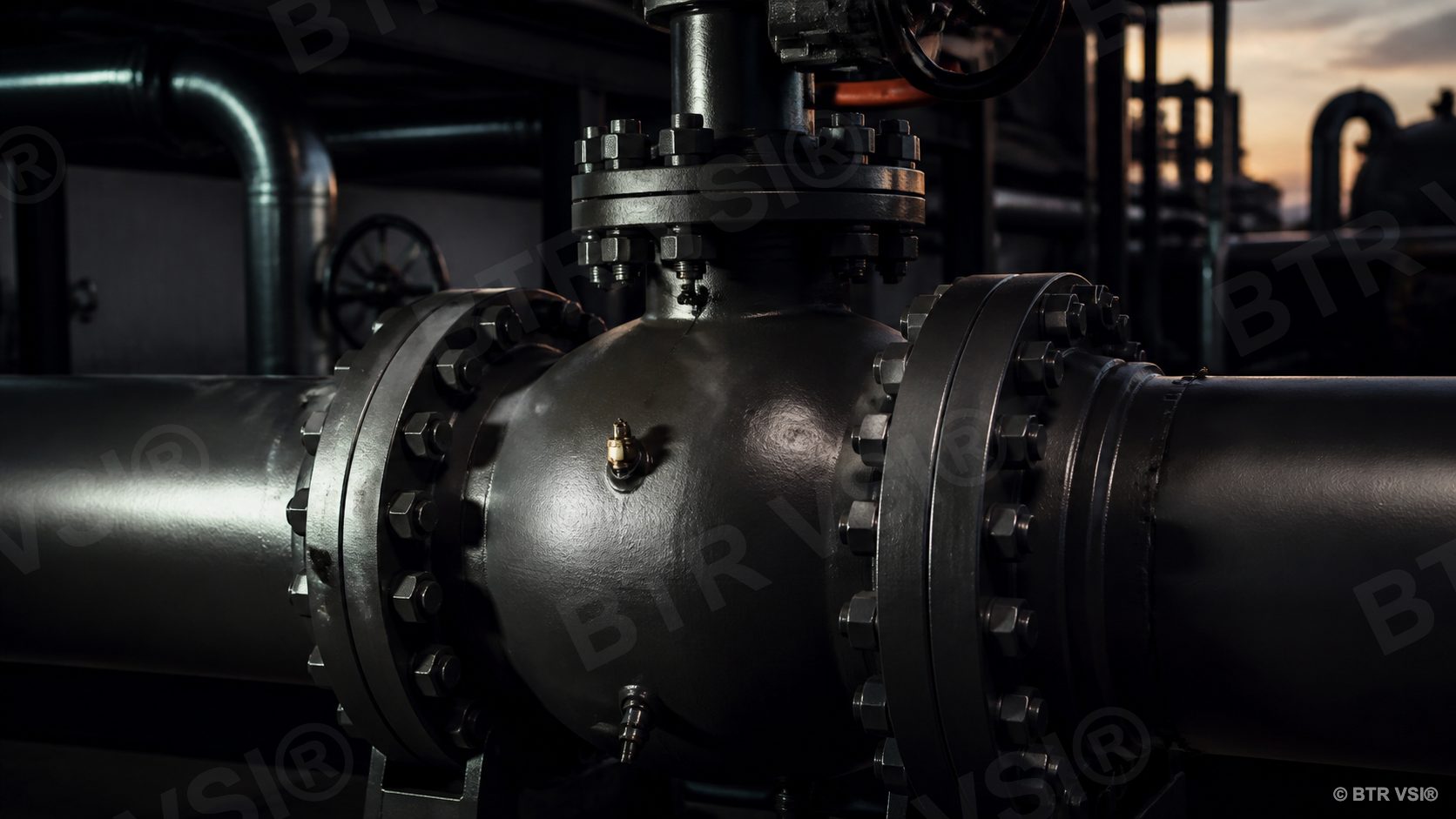
Think of a pipeline ball valve carrying product under pressure. The body cavity between the seats, the seat faces and the stem bearings all need a film.
That film sits against flowing product and sustained line pressure. A plain oil would drain, be swept through, or be squeezed out over time.
Retention is therefore the whole point of lubricating an installed valve. A compound that stays can also support seat sealing, which a liquid cannot sustain.
Sealing between the ball and the seat depends on a stable film. Without retention, that film is lost whenever the valve sits still.
This is why our guide to valve lubrication is built on compounds that stay where they are injected. For the same reason, installed valves need injection rather than films applied by hand.
4. Why valve compounds are neither ordinary grease nor oil
Valve compounds are engineered for one duty, which is staying inside a live valve. Our valve lubricants are made in-house for exactly these conditions.
They must be soft enough to inject through buttonhead fittings, yet firm enough to resist line flow. They must also tolerate the product, the pressure and the temperature without washing out. Cleaners and sealants follow the same logic, formulated to travel and then behave in a chosen way.
An ordinary shop grease is not made for this duty. It may be too stiff to inject, or too weak to stay in place. A plain oil cannot be retained in the cavity at all.
Injection also has gates, and they come before any recommendation of a compound. The valve needs fittings in good condition, and the design must suit injection. Site rules and the permit-to-work must also allow the job on the day. OEM documents, where they exist, set limits and warranty terms worth consulting.
Not every valve can be treated in service, and we say so when it cannot.
5. What this means in practice
Do not ask which lubricant is better in general terms. Ask what the valve must do: hold a film, support sealing, and stay treatable in service.
Retention must also be renewed, because the compound slowly leaves or is consumed. Reported practice is a top-up twice a year, about one eighth of system capacity. That figure is common operator practice, not a rule, and intervals vary by valve and site. Some sites top up more often during warranty periods.
A valve that turns stiff, or passes through the seat, suggests lost or hardened lubricant. A symptom only indicates, and it never confirms the diagnosis on its own.
Where site practice allows, cycling the valve helps spread the film after treatment. The confirming step for a passing valve is a seat-leak test under agreed conditions. Pressure decay across the closed valve is one accepted form of that test. If controlled treatment does not hold, the honest endpoint is assessment or repair.
Common questions
Grease versus oil questions, answered directly
Is grease or oil better for valves?
Neither is better in general. Oil cannot stay in a valve cavity under line flow, so valves normally need compounds with grease-like retention. The valve design and the service decide.
Can I use ordinary grease in a pipeline valve?
Ordinary greases are not made for injection or pipeline service. They may be too stiff to inject, or they may wash out and harden. A compound matched to the valve and the product is the safer choice.
Does grease contain oil?
Yes, grease is base oil held in a thickener, usually a soap. The thickener keeps the oil in place, and the oil itself does the lubricating. Change the base oil and you change the grease.
Why do valves need injection instead of oil?
Installed valves cannot be opened and oiled by hand. Compounds are injected through fittings so the film in the cavity and on the seats can be renewed without a shutdown, where the design allows it.
Unsure which compound your valve needs?
Send the valve details. An engineer replies within 24 hours.
Send the valve type, size, service and symptoms, plus a photo of the injection fittings if you have one.