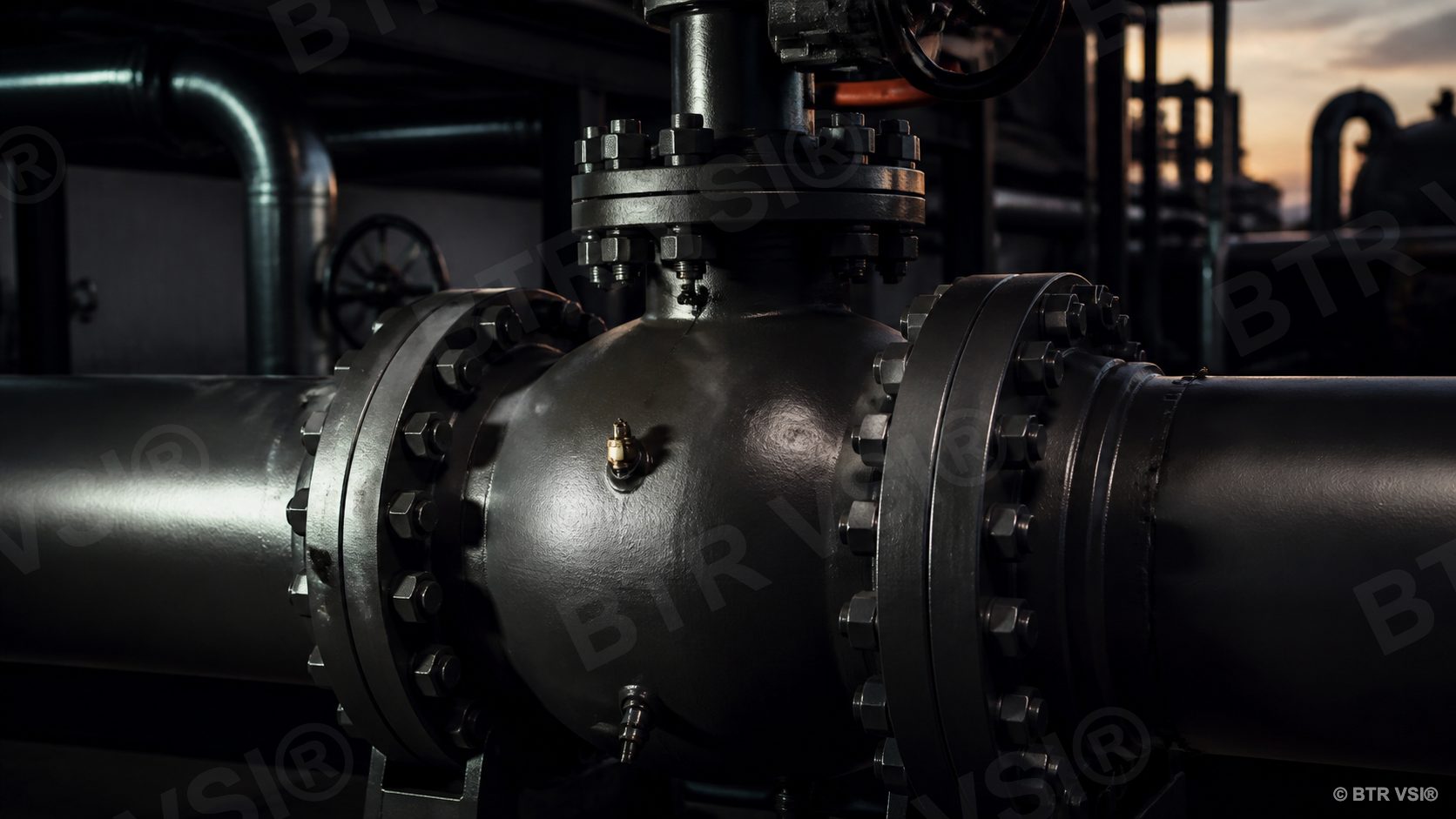
Sand or other hard debris trapped in a valve cavity acts as a lapping compound. Each operation presses the particles between ball and seat, removing fine layers of trim material. A clean lubricant film, regular cavity flushing and controlled filling reduce this three-body wear, but injection cannot repair surfaces that are already scored.
Knowledge · Lubrication science
Sand in the cavity: how debris becomes a lapping compound
Sand trapped in a valve cavity turns every cycle into a grinding operation.
1. How debris becomes a lapping compound
A lapping compound is a paste that carries hard abrasive particles across a surface. Engineers use it on purpose to grind and polish valve seats. Sand in a valve cavity does the same job by accident.
Tribologists call the mechanism three-body abrasion. The ball and the seat form two bodies, and a trapped sand grain is the third. Seat load presses the grain into both surfaces. Each cycle then drags it across them.
The result is fine scoring on the ball and the seat faces. Hard minerals such as quartz cut even hardened trims. The wear stays hidden inside the cavity until the valve begins to pass.
2. Where the debris comes from
Sand and grit reach the cavity through several routes. Common sources include produced sand from wells and scale from pipe walls. Slag and grit left from construction also travel with the flow. Fine solids keep moving until the cavity traps them.
- Well streams carrying formation sand into manifold valves.
- Construction debris left in new pipe, pushed toward the valves.
- Scale and corrosion products broken loose by flow changes.
- Hardened pockets of old sealant or dried lubricant inside the cavity.
Industry knowledge holds that some organic sealants harden in dry gas service. Those hardened lumps later crumble into abrasive solids. For ingress paths and flushing limits in detail, see sand contamination in wellhead and pipeline valves.
3. What the signs suggest and what confirms them
Debris wear shows itself as slow changes in service. Common signs include rising operating torque and seat leakage that grows after each cycle. Dirt at the cavity relief point is another clue.
Each sign only suggests wear. Loose debris can also hold a seat slightly open, which mimics a worn trim. Screening evidence cannot separate the two cases.
A passing valve therefore needs a seat-leak test under agreed conditions. Suitable methods include pressure decay across the closed valve. Double block and bleed monitoring, or a witnessed leak test, also serve.
For the related failure patterns, see ball valve passing: debris, seat damage or a false sign and cavity pressure in ball valves.
4. The lubricant film as a barrier
A clean lubricant film is a barrier, not a filter. A complete film separates the ball from the seat. It keeps fine particles away from the loaded surfaces. It also holds some particles within the grease body itself.
The barrier has limits. Grease does not remove sand from the cavity. A thick fill of grease carrying sand can make grinding worse. It holds the abrasive in the contact zone. Only a clean film protects.
This is why the order matters: flush first, then fill. Remove the old compound and its cargo of solids, then build a fresh film. The behaviour of lubricant films under seat load explains why thickness alone is not enough. Our valve lubrication guide covers the full sequence.
5. Cavity fill discipline
Gates come first. The injection fittings must be in good condition. The valve design and service must suit injection. Site rules and the permit-to-work must allow the job. Where OEM documents exist, consult them for limits and warranty terms.
Not every valve suits injection. Valves built with injection points are designed for care in service, and many others are not.
- Flush the cavity with cleaner, and give it time to work.
- Fill with fresh lubricant or sealant in controlled amounts, within equipment and fitting ratings.
- Watch the pressure response throughout, and stop if it behaves abnormally.
- Cycle the valve so the fresh film spreads, then top up if needed.
- Repeat on a set schedule, not after problems appear.
Industry practice is to cycle valves at least twice a year to prevent seizing. Cycle after flushing, not before. Then debris leaves the cavity instead of grinding the trims. Our clean, lubricate and seal service follows this order.
6. What injection cannot repair
Knowing the limits avoids wasted effort. Cleaners and lubricants manage debris and protect surfaces. They cannot restore a ball or seat that is already scored. A sealant can reduce leakage in suitable cases, but the wear underneath remains.
When leakage continues after flushing and filming, the next evidence step is assessment. A witnessed seat-leak test, and where possible an internal inspection, shows whether the trim needs replacement. That decision rests with the valve owner and the OEM data, not with the injection gun.
A structured survey across the valve population ranks which valves merit treatment and which need workshop attention. See our valve condition surveys for that first step.
Common questions
Sand lapping wear questions, answered directly
Does sand in a valve cavity cause passing?
Debris on a seat can hold the valve slightly open, and abrasive wear can damage the sealing faces. Both show as seat leakage. A seat-leak test under agreed conditions separates a debris problem from a worn trim.
Can valve lubricant prevent abrasive wear?
A clean film reduces three-body wear by keeping particles away from loaded surfaces. It does not remove debris from the cavity. Flush the cavity first, then build a fresh film, and repeat on a schedule.
Should you cycle a valve with debris inside?
Cycling spreads lubricant and helps prevent seizing, and industry practice suggests at least twice a year. Cycle after flushing, not before. Otherwise each movement drags abrasive particles across the sealing faces.
Will sealant fix a valve with scored seats?
A sealant can reduce leakage in suitable cases by filling fine wear pathways. It cannot restore the machined surfaces, so the wear remains. A witnessed seat-leak test and, where possible, inspection show when replacement is the honest answer.
Suspect debris wear in a valve?
Send the valve details. An engineer replies within 24 hours.
Include valve type and size, the service fluid, the symptoms seen and any test results.