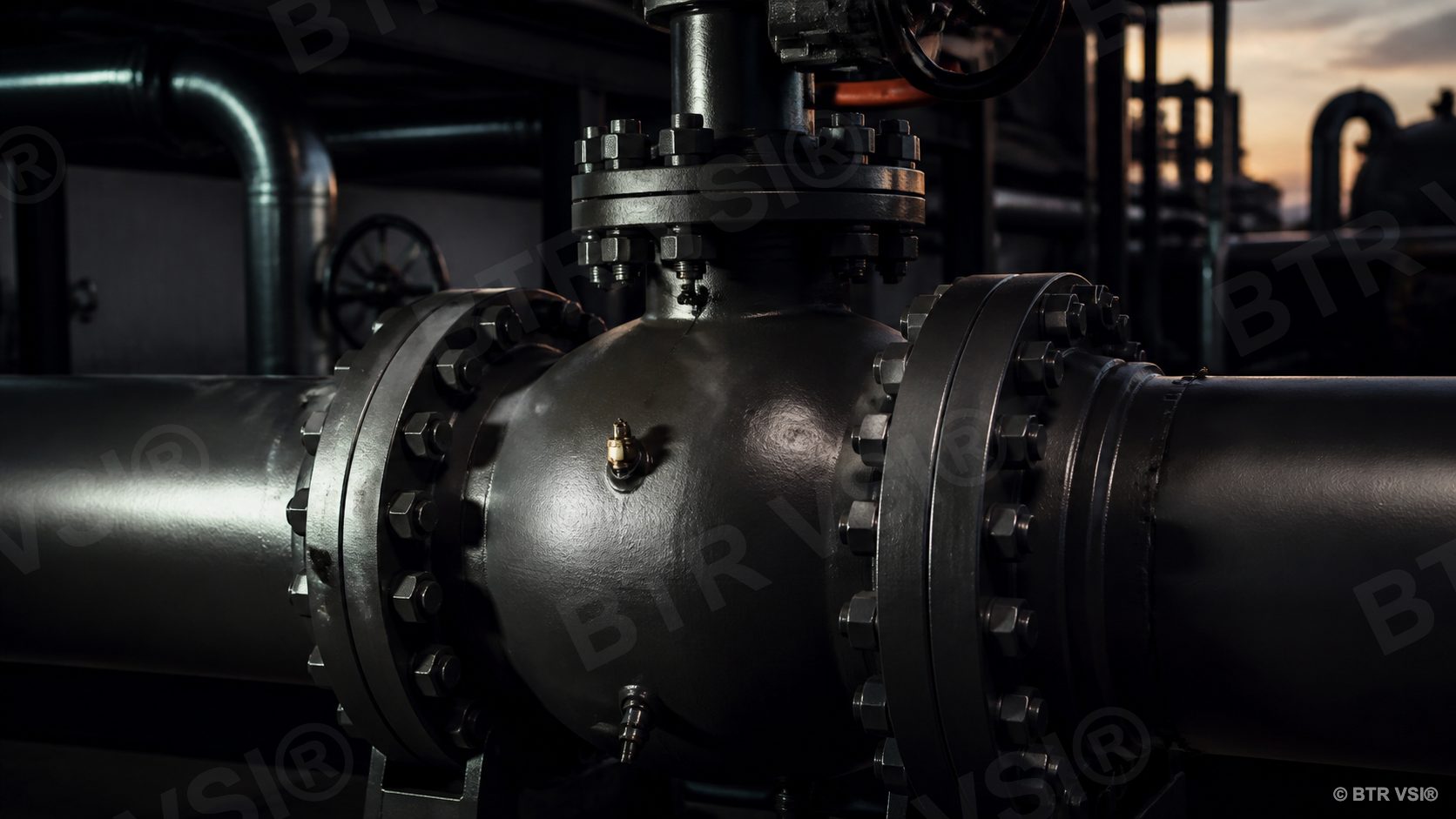
When a valve closes, seat load squeezes most of the lubricant out and leaves only a thin boundary film. On metal seats that film lowers friction, helps prevent galling and occupies fine leak paths, so it supports sealing. On soft polymer seats the seat itself seals, and the film mainly controls friction and wear; no film can repair a damaged or deformed seat.
Knowledge · Lubrication science
Lubricant films under seat load: why the film matters for sealing
Under seat load, the lubricant film becomes a thin boundary layer that still shapes friction, wear and sealing.
1. What seat load does to the film
A closed valve presses each seat against the ball with high contact stress. That stress squeezes most of the lubricant out of the contact zone. What remains is a boundary film, held in the valleys of the surface finish.
Engineers call this state boundary lubrication, and it is the normal regime inside a seated valve. The surface peaks carry the load, not the lubricant itself. The film still separates those peaks for part of each slide.
This is why film condition, not film volume, governs behaviour. A dried, washed-out or contaminated film behaves very differently from a fresh one. Seats feel the difference through friction, wear and changes in leak paths. Washing by the process fluid, heat and time all thin the film further.
2. Why metal seats depend on the film
Metal seats seal along a narrow contact band under high local stress. Surface finish and seat load decide how well that band blocks flow. The boundary film helps this band in several ways.
- It lowers friction during cycling, which reduces galling and seizure risk on the seat.
- It partly fills the micro-roughness of the band, narrowing the paths fluid can take.
- It carries protective chemistry into the contact zone during long static periods.
None of this replaces seat contact stress; the film only assists what stress already achieves. A dry metal seat can pick up and tear its own contact band. Seat loading also differs between valve designs, and this changes the film's job. Read why trunnion and floating seats leak differently to see the contrast.
3. Soft seats and the film
Soft seats, such as polymer or elastomer inserts, conform to the ball surface. The polymer itself forms the seal, kept pressed in place by seat load. Here the lubricant film is not the primary seal.
The film still earns its place through friction and wear control. It cushions the seat each time the valve cycles and limits abrasion damage. The trade-off is chemical compatibility between lubricant and seat material. Some lubricants swell, soften or harden polymer compounds over time. A softened seat can extrude under load, and a hardened seat loses conformity. High seat load also raises operating torque, and a good film keeps it predictable.
Compatibility checks belong at the selection stage, not after a seat fails. Our primer on elastomer compatibility explains why compounds swell or harden.
4. What a film cannot fix
A boundary film improves surfaces that are essentially sound. It cannot restore a seat that has warped, eroded or been scored by debris. Common causes of seat damage include debris in the cavity, abrasive service and process heat.
No volume of lubricant compensates for lost seat interference or a deformed ball. If leakage continues after cleaning and lubrication, stop adding product and reassess. A passing indication can even be a false sign, so treat it as screening evidence only.
The confirming step is a seat-leak test under agreed conditions. Pressure decay across the closed valve is one accepted method. Factory standards such as API 598 and ISO 5208 define leakage classes, not field results. That result, not the symptom, decides the next step: further treatment, assessment or replacement. For the diagnosis side, see ball valve passing and its common causes.
5. Keeping the film useful
Before recommending any product, state the gates for the job. The valve must have injection fittings in good condition. The valve design and service must suit injection, and not every design does. Site rules and the permit-to-work must allow the job. Where OEM documents exist, consult them for limits and warranty terms.
In service, fresh lubricant goes in as controlled amounts within equipment and fitting ratings. Watch the pressure response and stop if it climbs without movement. Cycling the valve afterwards spreads the film across the seat band. Films left static degrade, so valves that never move lose their protection quietly.
Our valve lubrication guide covers selection and practice in more depth. We also make our valve lubricants in-house for seat and stem service.
Common questions
Film and seat sealing questions, answered directly
Does lubricant stop a valve seat from leaking?
Often, but only when the seat is essentially sound. The film narrows fine leak paths and lowers friction. If the seat is warped, scored or holding debris, lubricant alone will not seal it. Confirm with a seat-leak test under agreed conditions.
What is boundary lubrication in a valve?
It is the state where seat load has squeezed out most of the lubricant, leaving a very thin film on the surfaces. The surface peaks carry the load while the film cuts friction and occupies fine leak paths.
Do soft seats need valve lubricant?
They usually need it for friction and wear control, not for sealing. The polymer seat does the sealing. Check chemical compatibility first, because some lubricants swell or harden polymer compounds and damage the seat.
Can too much lubricant harm a valve?
It can. Excess product can hold debris in the cavity, and the wrong product can harden in dry gas service and add seizure risk. Inject controlled amounts within equipment and fitting ratings, watching the pressure response.
Seat leak after lubrication?
Send the valve details. An engineer replies within 24 hours.
Include valve size and class, service fluid, seat material, symptoms and any test results.