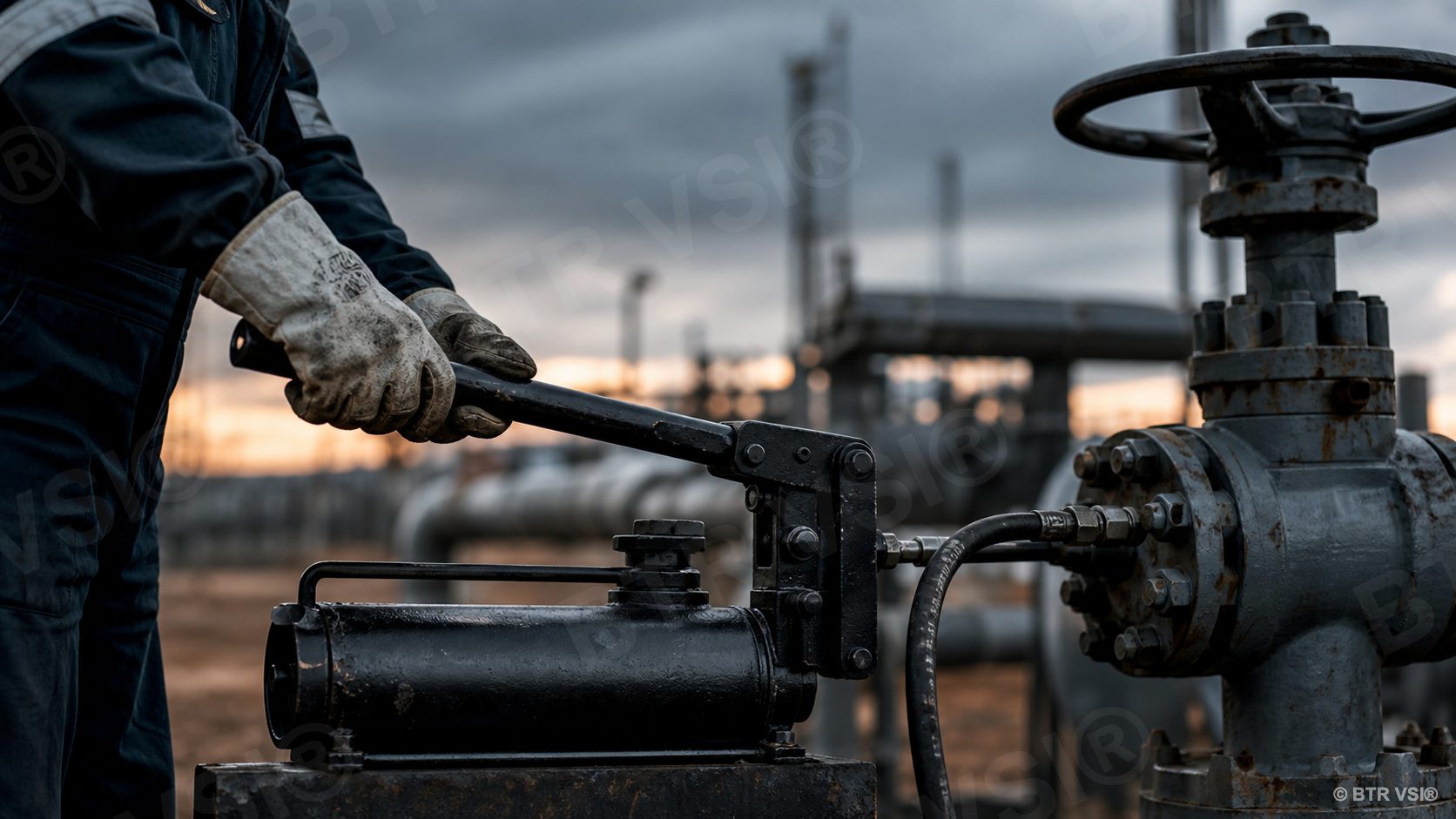
A sealant pump system earns its place when valve size or campaign length makes hand guns impractical: large seat rings need more sealant than one person can pump by hand. A pneumatic pump with a stroke counter delivers measured amounts at a steady rate, so the crew controls volume rather than guessing. The trade-offs are a compressed air supply, rated hoses and a two-person crew.
Knowledge · Injection equipment
Pump systems for large valves and long campaigns
For large valves and long campaigns, a pump system delivers the volume a hand gun cannot.
1. When a hand gun stops being enough
A hydraulic hand gun such as the BTR450D is simple, portable and needs no power supply. For small valves, stem fittings and routine top-ups, it is often enough. It is also the least intrusive option where no air reaches the valve.
Large valves change the arithmetic. A big seat ring holds far more sealant than a stem fitting. Each valve therefore needs many more strokes, and a long campaign multiplies that effort. The operator tires, and the stroke count becomes guesswork.
The trade-offs are real. A pump system needs an air supply, rated hoses and setup time. Before any injection, the gates apply: fittings in good condition, a valve design that suits injection, and a permit that allows the work. Where OEM documents exist, consult them for limits and warranty terms. The full comparison is in our injection equipment buying guide.
2. Stroke counting turns volume into control
A pneumatic pump moves a fixed volume of sealant on every stroke. That fixed volume is the key property, because strokes become units of measure. A counter makes the delivered quantity visible instead of remembered.
We build pneumatic pump systems with customised stroke counters for this reason. Estimate the quantity before starting, then inject in controlled stages within equipment and fitting ratings. Watch the pressure response throughout. A steady rise suggests the cavity is filling. A sudden spike is a stop-work condition.
Record the strokes taken at each fitting, on each valve. Estimating the total in advance is covered in estimating valve sealant quantity. The count gives control, not proof of a seal.
3. Hoses and fittings set the ceiling
The injection chain runs from pump to hose, coupler, buttonhead fitting and valve. The lowest rated component in that chain sets the working limit. A pump capable of more pressure does not raise that ceiling.
Inspect hoses before every campaign. Look for cuts, kinks, bulges and worn couplings, and replace anything doubtful. Use the shortest practical length, because a long hose stores more energy and whips harder if a connection fails. Keep people clear of the hose line during injection.
Write down hose condition and fitting checks rather than trusting memory. A simple template is described in an inspection log for injection equipment. Faults found during a job cost the campaign time and often the permit window.
4. Crew, air supply and campaign planning
A pneumatic pump needs compressed air with enough flow to hold a steady stroke rate. Confirm the air supply at each valve location before planning the schedule. Remote manifolds and long air lines change what is practical.
Crews work best in pairs. One operator controls the pump and watches the gauge and the counter. The second works at the valve, manages the fittings and watches for leaks. For hand gun work, rotate operators, because tired operators lose count.
Plan the campaign as one sequence rather than separate jobs.
- List the valves, their sizes and their injection points.
- Book permit windows and confirm air at each location.
- Estimate sealant per valve and stock a margin.
- Carry spares, including the service kit for each gun model.
- Record strokes and pressure response for every fitting.
When you are ready to compare systems, the points in what to tell us before an equipment enquiry will speed the reply.
5. What a pump system cannot do
A pump moves cleaner, lubricant or sealant, nothing more. It cannot restore a damaged seat, repair a stem or free a mechanically seized valve. Cleaner helps in suitable cases, but a valve that will not move needs assessment, not more pressure.
Injection is not universally possible either. Some valves carry no injection fittings, and some services rule the method out. Where controlled amounts within ratings do not achieve sealing, the honest endpoint is a proper assessment, repair or replacement.
Treat field observations as screening evidence. A fall in visible leakage suggests progress but does not confirm a seal. The confirming step is a seat-leak test under agreed conditions, such as pressure decay across the closed valve, double block and bleed monitoring, or a witnessed leak test.
Common questions
Sealant pump systems questions, answered directly
Do I need a pump system or is a hand gun enough?
A hand gun suits small valves, stem fittings and routine top-ups where no air supply exists. A pump system earns its place when large seat rings or many valves make hand strokes impractical. Compare the total strokes a campaign needs before deciding.
How does a stroke counter help with sealant injection?
Each pump stroke moves a fixed, known volume of sealant, so the counter measures the total product delivered. That turns injection into controlled stages instead of guesswork. Record strokes per fitting, and watch the pressure response alongside the count.
What should I check on high pressure hoses before a campaign?
Inspect for cuts, kinks, bulges and worn couplings, and replace anything doubtful. Use the shortest practical length and keep the crew clear of the hose line. Remember that the lowest rated component in the chain sets your working limit.
Can a sealant pump fix a seized or damaged large valve?
No. A pump moves cleaner, lubricant or sealant; it cannot repair a damaged seat or free a mechanically seized valve. If controlled amounts within ratings do not work, the next step is a proper assessment, repair or replacement.
Planning a sealant pumping campaign?
Send the valve list. An engineer replies within 24 hours.
Include valve sizes and quantities, injection fitting details, available air supply and your campaign schedule.