A site equipment list for online valve maintenance starts with the valve population: count, sizes, pressure classes and fitting types. Small populations with modest volumes often suit a hydraulic hand gun plus a stocked consumables box, while larger populations favour air-operated guns and pneumatic pump systems with stroke counters. Consumables and service kits should match the same population so the whole kit stays coherent.
Knowledge · Injection equipment
Equipping a site for online valve maintenance: guns, pumps and consumables by valve population
Size your guns, pumps and consumables from the valve population you actually maintain.
1. Begin with the valve population
The equipment list follows the population, not the catalogue. Start by counting the valves you will maintain online. Then record size, pressure class, service and fitting type for each group.
Injection suits valves built with injection points, and not every valve qualifies. Fittings must be in good condition, and the valve design and service must suit injection. Site rules and the permit-to-work must allow the job, and OEM documents should be consulted where they exist.
- Count valves by type, size and pressure class.
- Record buttonhead fitting sizes and condition.
- List the services: wet gas, dry gas, crude, water.
- Mark valves with injection points and those without.
A condition survey turns a guess into a defensible list. A valve survey records this baseline before you buy anything.
2. Guns or pumps by pressure and volume
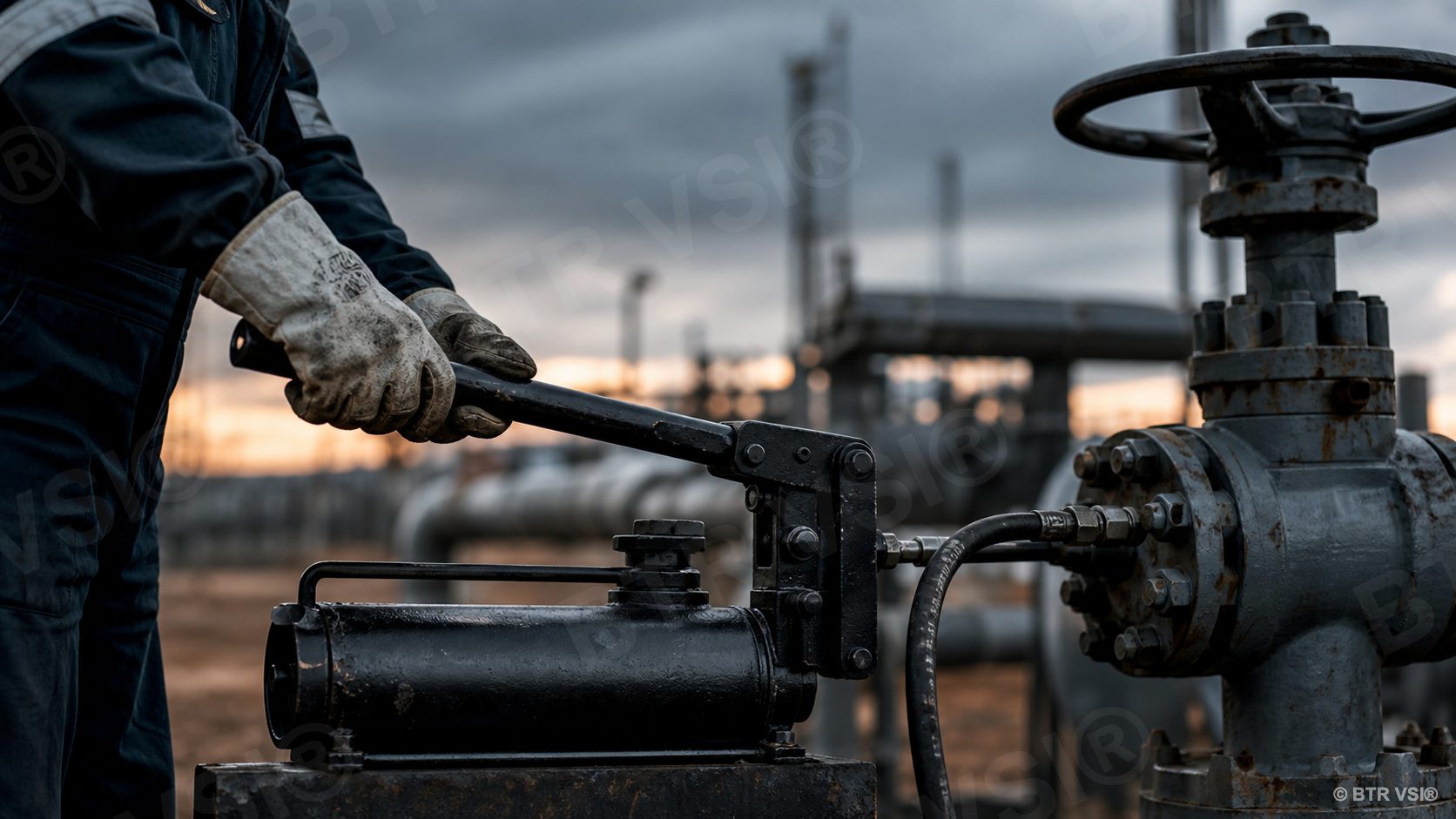
A hydraulic hand gun, such as the BTR450D, serves small populations and occasional jobs well. It needs no power, one person operates it, and it delivers small controlled amounts. For frequent top-ups across many valves, hand pumping becomes slow and tiring.
Air-driven equipment takes over as volume and pressure grow. The BTR 550D air-operated gun works to 10,000 PSI with a double-acting piston. Pneumatic pump systems deliver larger volumes and can carry customised stroke counters for measured, accountable injection.
The choice is a pressure, volume and labour question. Choosing injection equipment by pressure, volume and field constraints works through the trade-offs, and the injection equipment buying guide covers the full purchase. Our pneumatic pump systems are configured to each site.
3. Match equipment to site air supply
Air-operated guns and pneumatic pumps need compressed air of adequate pressure and flow. Some sites have instrument air everywhere; remote stations may have none. Check air availability before choosing equipment, not after it arrives.
Where air is absent, hand guns remain the honest answer for small programmes. Where air is intermittent, plan a compressor or bottled air with the site permit system. Compressed air for injection guns sets out what the site must provide.
Also confirm the practical points: access to fittings, lifting for heavy cases, and lighting. Equipment that cannot reach the valve maintains nothing.
4. Stock consumables against the failure mix
Consumables should follow the population and its failure modes. In a risk-based valve integrity study of upstream and midstream sites, published by Valve World, passing seats dominated at 61 per cent, with seized valves at 28 per cent. Distributions vary by population, so treat the figures as a prompt, not a recipe.
That mix usually means more cleaner and sealant than lubricant for neglected populations, and the reverse for well-kept ones. Dry gas service needs care: organic sealants can harden in dry gas and seize valves, which is industry knowledge, not folklore.
We manufacture cleaners, lubricants and non-hardening sealants in-house, so we can advise on the split. Request the guide through an enquiry and an engineer will match products to your services. See valve sealants for the range.
5. Keep the kit coherent
A kit is coherent when every part serves the same population. Each gun model has a minor and a major service kit, so spares must match the guns you own. Couplers, stowage, spare buttonheads and cleaning solvent belong on the same shelf as the guns.
Write the kit down as a checklist, and audit it after every job. Missing spares stop work faster than broken guns. The complete field kit for online valve service offers a working template.
Commission new equipment with checks before its first live job. Train the operators who will use it, and set stop-work rules for abnormal pressure response. Controlled amounts within equipment and fitting ratings protect valves and people alike.
6. Send us the population
Send the valve list and we will propose the equipment. Include valve types, sizes, pressure classes, services and fitting condition. An engineer replies within 24 hours to a message sent by WhatsApp or the contact form.
If the population is uncertain, a survey comes first. If it is known, we propose guns, pumps, the air plan and consumables together. Where a valve is too damaged for injection, we will say so, and recommend assessment or replacement instead. Our engineers draw on over 30 years of field work.
Training, equipment repair and annual maintenance contracts can follow the same enquiry.
Common questions
Equipment list basics questions, answered directly
What equipment is needed for online valve maintenance?
A hydraulic hand gun or air-operated gun, matching couplers, cleaner, lubricant and sealant, plus service kits for each gun. Larger populations add a pneumatic pump system, often with a stroke counter, and a stocked field kit. The list should match your valve population.
Should I choose a hand gun or a pneumatic pump?
Choose by pressure, volume and air supply. Hand guns suit small populations and occasional work; air guns and pumps suit frequent, higher-volume or higher-pressure programmes. Check that the site can supply adequate compressed air before buying air-driven equipment.
How much cleaner and sealant should a site stock?
Stock in proportion to your failure mix and top-up cadence, both of which vary by population and service. Follow equipment and fitting ratings, and avoid bulk buying products that may not suit every service. We can size a stock list from your valve data.
How do we confirm a valve stopped passing after injection?
Pressure rise or reduced flow only suggests success; it does not prove it. Confirm with a seat-leak test under agreed conditions, such as pressure decay across the closed valve or double block and bleed monitoring. API 598 and ISO 5208 remain factory references, not field tests.
Equipping a site or team?
Send the valve list. An engineer replies within 24 hours.
Include valve types, sizes, pressure classes, services, fitting condition and site air supply.