A wellhead lubricant is a friction reducer for the moving parts of a valve, such as the stem, threads and bearings, keeping operating torque low. A pipeline sealant is a non-hardening compound injected into the seat area of a ball or plug valve to block leakage through a closed valve. They differ in job, service conditions and injection arrangement, and one cannot replace the other.
Knowledge · Comparisons
Wellhead lubricant versus pipeline sealant: different jobs
They sound similar, but a wellhead lubricant and a pipeline sealant do two different jobs.
1. Two products, two jobs
A wellhead lubricant is a friction reducer for the moving parts of a valve. It works between surfaces that slide against each other, above all the stem, the threads and the bearings. Its job is to keep operating torque low and to protect those surfaces from wear.
A pipeline sealant does different work inside the same valve. It is a non-hardening compound injected into the seat area of a ball or plug valve. Its job is to fill fine damage in the seat interface and to block leakage through a closed valve. It stays plastic in the seat pocket, so the valve can still move when needed.
Both products belong to the practice of online valve maintenance, in which valves are treated in service. One keeps the valve easy to operate, and the other helps it isolate the line. In practice, neither product can do the work of the other.
2. Service conditions decide the choice
Wellhead service usually means high pressure gas, sometimes with sour components and wide temperature swings. A lubricant for this duty must stay stable under line pressure. It must not wash away, dry out, or react with the produced fluid. The wellhead also moves between cold starts and flowing conditions, which tests the compound.
Pipeline service brings its own constraints, because dry gas, crude and produced water behave differently. Industry knowledge records that some organic sealants harden in dry gas and can seize a valve. The service medium must therefore drive the choice of compound.
We make our lubricants and sealants in-house, so we can match each compound to the duty. For a closer look at media, elastomers and old product, see our page on valve sealant compatibility.
3. Injection arrangements are not the same
A lubricant normally enters through fittings on the gland, the stem or the bearing zones. Pressures stay moderate, and a hand gun is often enough for the task. The compound then reaches the sliding surfaces, and regular cycling spreads the film.
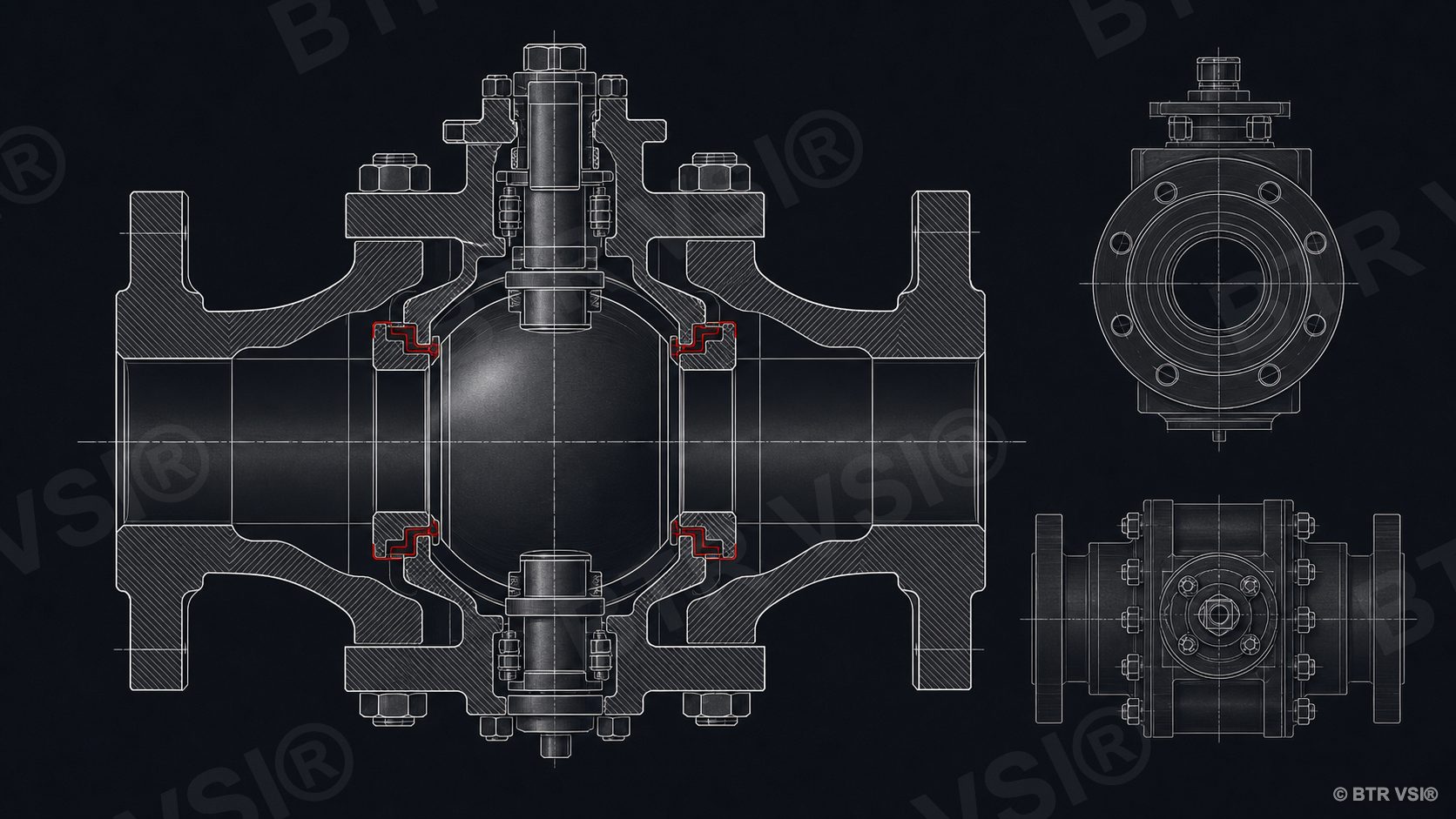
A sealant, by contrast, takes a different path through the valve. On ball and plug valves it enters through seat injection ports drilled around the body. These ports end at the seat pockets, close to where the leakage crosses. This path needs high pressure equipment and a careful, controlled technique.
Before any injection, the same gates apply in every case:
- The fittings are in good condition and accept a coupling.
- The valve design and the service both suit injection.
- The site rules and the permit to work allow the job.
Where OEM documents exist, read them for limits and warranty terms before work starts. Treatment then means controlled amounts within equipment and fitting ratings, while the pressure response is watched. Stop if the pressure climbs sharply or the valve shows distress. Our clean, lubricate and seal service works to this discipline.
4. Matching the compound to the symptom
The symptom should choose the product, because each symptom points to a different place. Treat every reading as screening evidence, never as proof on its own.
- The valve is stiff or the torque is high. Friction is the likely problem, so lubrication comes first.
- The valve closes but still passes. The seat is the likely path, so sealant is the candidate treatment.
- Fluid escapes around the stem. This is a packing issue, and injection helps only in some designs.
Smooth operation after lubrication only suggests that the friction problem is solved. A closed valve that stops passing still needs a seat-leak test under agreed conditions. API 598 and ISO 5208 are factory acceptance references, not field results. For guidance by seat and service, see sealant selection by valve type.
5. Mistakes that cost time and product
Mixing up the two products wastes compound and can leave the real problem untreated. Some errors appear again and again in the field.
- Reaching for general purpose grease. Grease is not formulated for valve seats or for high pressure gas, and it can wash out. See why grease is not a substitute.
- Injecting sealant because the valve is stiff. Stiffness points to friction, and sealant does not lubricate the stem.
- Chasing seat leakage with ever more sealant. If controlled amounts do not hold, the seat may be badly damaged. The honest endpoint is then a proper assessment or replacement, not more compound.
- Choosing on price alone. A cheap compound that fails in service costs far more later, as our total cost comparison explains.
Common questions
Lubricant versus sealant questions, answered directly
Can a pipeline sealant replace wellhead lubricant?
No, because they do different jobs. A sealant blocks leakage across the seat of a closed valve, while a lubricant reduces friction between the stem, the threads and the bearings. Using one in place of the other leaves the real problem untreated.
Why is a passing ball valve treated with sealant rather than grease?
A passing ball valve is leaking across its seat, often because of fine damage on the sealing faces. A sealant is formulated to fill such gaps and stay plastic. Grease is not designed for this duty and may wash away.
Is the injection method different for lubricant and sealant?
Yes. Lubricant usually enters through fittings on the gland or the stem at moderate pressure. Sealant enters through seat injection ports around the body, injected in controlled amounts with high pressure equipment while the response is watched.
When should you stop injecting sealant and repair the valve?
Stop when controlled amounts within equipment and fitting ratings do not hold the seat. Persistent passing after treatment suggests deeper seat damage. At that point the honest endpoint is a proper assessment or replacement, not more compound.
Which compound does your valve need?
Send the valve details. An engineer replies within 24 hours.
Include valve type, service medium, symptoms, pressure class and photos of the injection fittings, and we will suggest the next step.