A soft seat seals because a polymer ring conforms to the ball or disc, giving tight shutoff in clean, moderate service, but heat, debris and some fluids damage it. A metal seat seals on machined surfaces that tolerate heat and abrasion, yet leaks more readily once scratched or worn. Both can often be treated online when the seat is worn rather than destroyed, though the response differs.
Knowledge · Comparisons
Soft-seated versus metal-seated valves: sealing and maintenance differences
Soft seats and metal seats fail in different ways, and they answer injection treatment differently.
1. How each seat seals
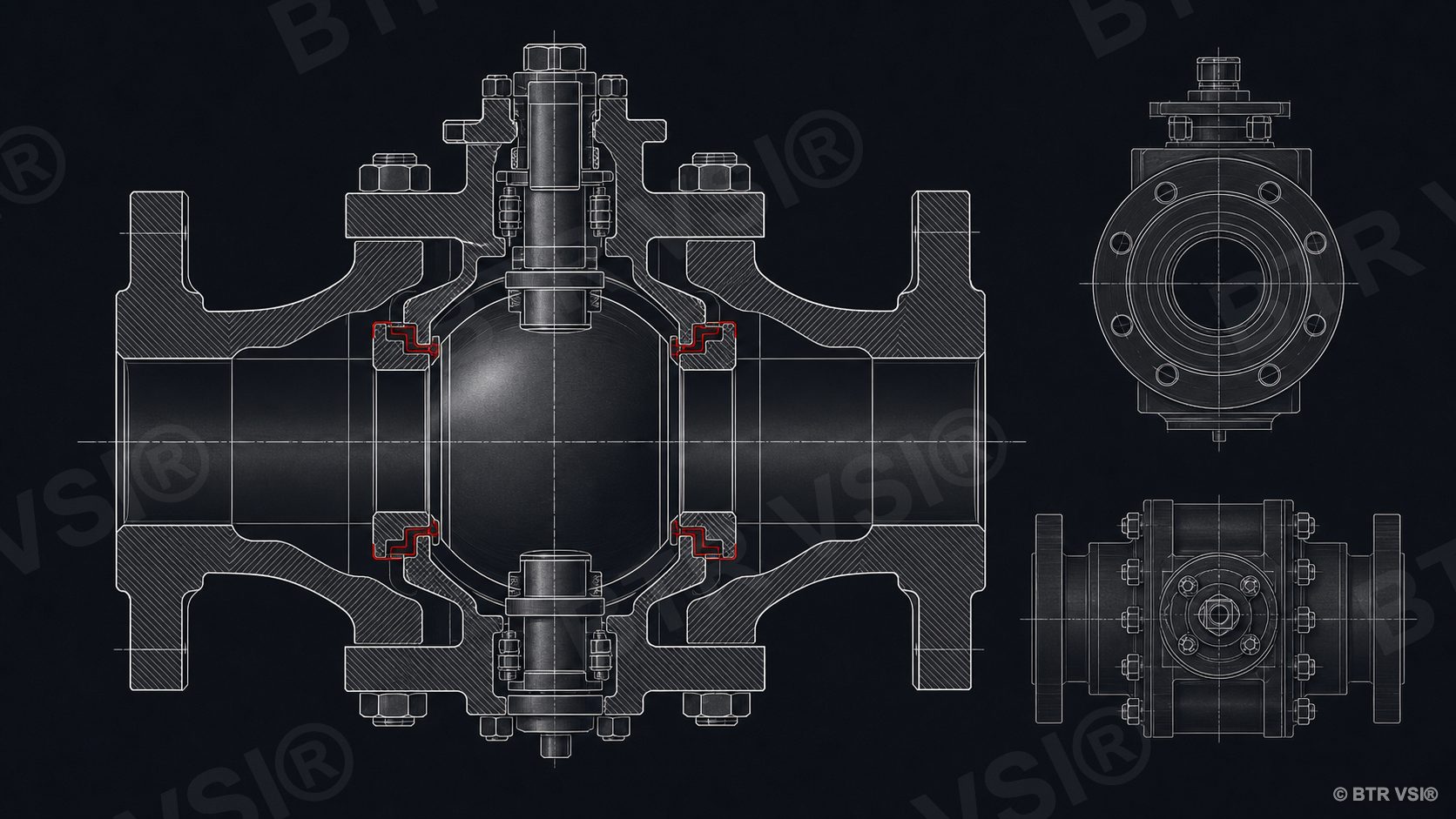
A soft seat is a polymer ring pressed against a ball, gate or disc. The polymer deforms slightly under load and fills small irregularities on the sealing surface. This conformity gives tight shutoff at a modest seating load.
A metal seat seals on machined or coated surfaces, often energised by springs. There is no conforming polymer, so sealing depends on surface finish, seating load and alignment. Any scratch across the contact band becomes a leak path. Both seat types appear in ball, gate and plug valves.
Temperature, pressure and fluid cleanliness matter as much as the material itself. A seat that holds at one pressure may pass at another, as covered in differential pressure and seat sealing.
2. How the two seats get damaged
Soft seats are damaged by whatever attacks or overloads the polymer. Common causes include debris embedding in the seat, scratching as particles cross it during cycling, extrusion into downstream cavities, softening from heat, and swelling from the fluid itself. The fluid matters, as explained under gas composition and seal compatibility.
Metal seats fail mainly through damage to their contact surfaces. Common causes include scratching from dragged debris, galling between similar metals, erosion from solids, and gradual wear of any coating. Each cycle without cleaning drags the same solids across the band. The result is often a shallow groove rather than a visible tear.
The difference matters for treatment, because a worn surface can still hold an injected sealing film. A torn or extruded polymer ring often cannot, whatever is injected.
3. How each seat responds to injection
Cleaner, lubricant and sealant act differently on each seat type. Cleaner loosens hardened deposits and old grease on the seat area. Lubricant cuts friction and operating torque. Sealant lays a film across the leak path.
Before any injection, three gates apply to the job:
- The valve has injection fittings in good condition.
- The valve design and the service suit injection, since valves built with injection points are designed for it.
- Site rules and the permit to work allow the job on a live line.
Where OEM documentation exists, consult it for limits and warranty terms. Use measured amounts within equipment and fitting ratings, and watch the pressure response. Stop if pressure climbs sharply or the valve shows distress.
Response differs by seat. On an intact soft seat, sealant can bridge fine scratches. On a metal seat, the film sits in the contact band and often works, though the film, not the metal, carries the seal. In industry experience, organic sealants can harden in dry gas and seize valves, so product choice must match the gas. Our clean, lubricate and seal service applies this judgement.
4. Proving whether a seat actually leaks
A hiss, bubbles or a slowly rising downstream pressure are screening signs. They suggest a seat leak; they never confirm one. Bleed lines, gauge faults and temperature change can all mislead, as ball valve passing explains.
Confirmation needs a seat leak test under agreed conditions. Common forms include pressure decay across the closed valve, double block and bleed monitoring, or a witnessed leak test at a stated pressure. Repeat the same test after treatment, so the comparison is honest.
Factory leakage classes such as ISO 5208 set allowable leakage at acceptance testing. Treat them as a reference point, not as a field result. A written result also helps when the next survey is planned.
5. Choosing between soft and metal seats
The seat choice is a trade-off, not a simple ranking. Soft seats give tighter shutoff in clean, moderate service. Metal seats survive heat, abrasives and slurries that would destroy a polymer. Also weigh spare parts, actuator size and the accepted leakage class. Neither choice removes the need for maintenance.
Injection also has an honest endpoint. A seat that is torn, heavily extruded or deeply eroded will not hold a film for long. Such valves need a proper assessment, and often workshop repair or seat replacement rather than treatment.
To see how in-service treatment fits the wider programme, read our guide to online valve maintenance.
Common questions
Seat type choice questions, answered directly
Which seat is better for high temperature service?
Metal seats, because polymers soften, deform and extrude as temperature rises. A metal seat keeps its shape and seating load in hot service. Exact limits depend on the seat material and the valve design.
Can sealant injection fix a leaking soft seat?
Often, in suitable cases, when the seat is scratched or worn rather than torn. The valve must have fittings in good condition and suit injection. A destroyed seat needs assessment and likely replacement.
Do metal seated valves leak more than soft seated valves?
At the same condition, a metal to metal seal is harder to make tight, so small leakage is more likely. Factory leakage classes set acceptable rates at acceptance testing. In service, condition and pressure decide the outcome.
When should I switch from soft seats to metal seats?
When the service is hot, abrasive or otherwise hostile to polymers, and a little seat leakage is acceptable. When tight shutoff in clean, cool service matters more, a soft seat is often the better choice. It is a trade-off, not an upgrade.
Facing a passing valve?
Send the valve details. An engineer replies within 24 hours.
Include valve type and size, service fluid, pressure and temperature, seat material if known, and what you observe.