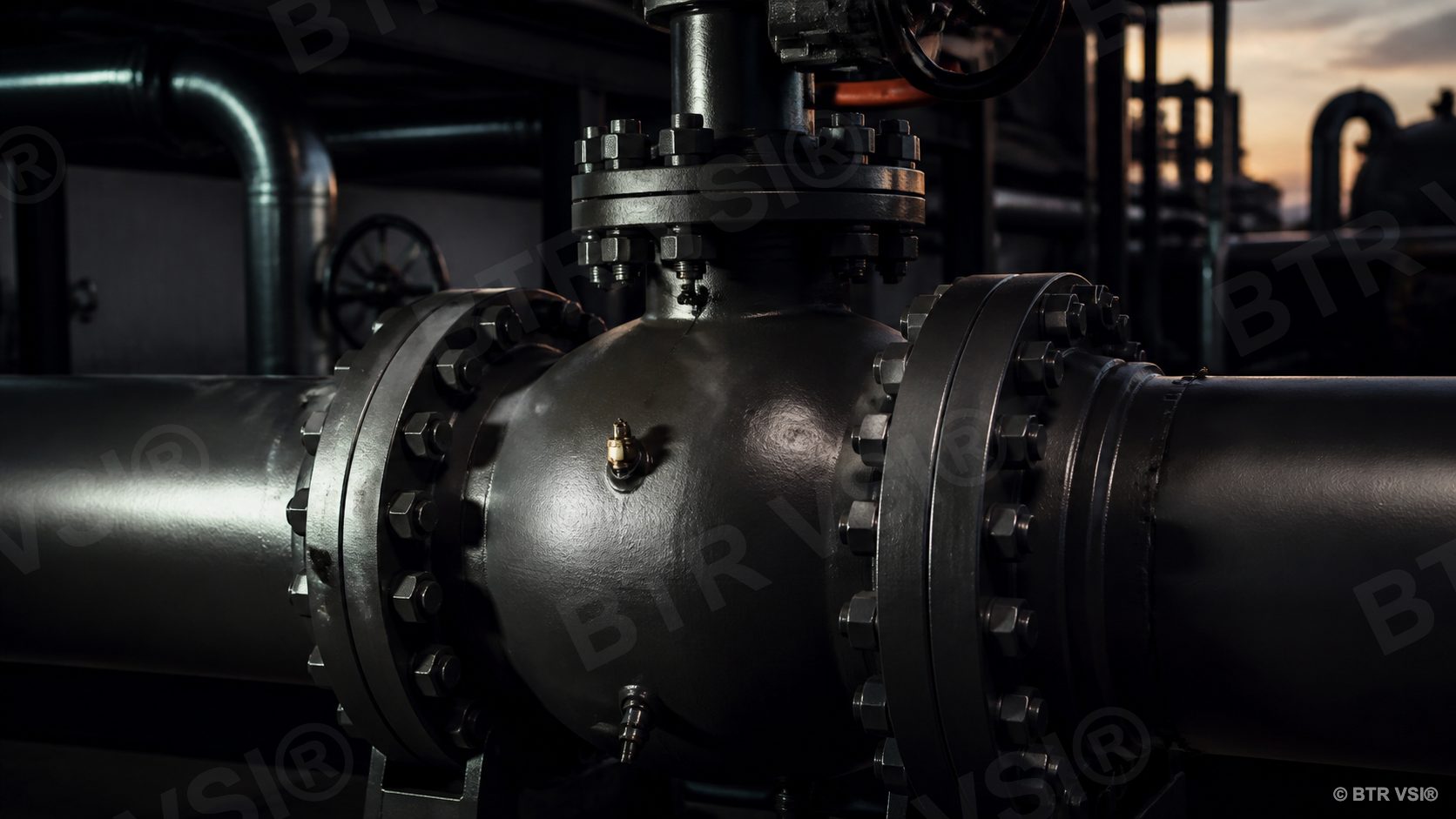
A non hardening valve sealant keeps a soft, plastic consistency for the life of the fill. It can be softened with cleaner, partly flushed and topped up through the injection fittings, so the valve stays maintainable while in service. A sealant that sets hard blocks the sealant passages, and the fill that stopped a leak can then help seize the valve.
Knowledge · Lubrication science
Why valve sealants must not harden: the non-hardening principle
A sealant that hardens in place blocks the passages it was meant to protect, so it must stay plastic.
1. What non hardening means
A valve sealant is a plastic solid. It is not a glue and it is not a cement. Under injection force it flows; at rest it holds its shape in the leak path. It seals because fibres and fillers, held in a soft base, bridge the gap between ball and seat. The mechanics of that bridging are explained in how fibres and fillers bridge valve leak paths.
The base must stay soft for the whole life of the fill. A sealant that sets cannot flow into a leak path again. It also cannot leave the valve when it must. Every maintenance plan around the valve assumes a fill you can still move.
That assumption is the non hardening principle. It is a design rule within the wider valve lubrication and sealant guide, not a claim about any single product.
2. How a hard fill blocks and seizes
Sealant routes inside a valve are narrow. Injection ports, check valves and seat grooves all pass material through small channels. A fill that stiffens in those channels often follows this sequence:
- The material sets in the seat grooves and the body cavity.
- Fresh sealant can no longer pass the blocked channel, so top-up fails.
- A stiff film builds between ball and seats, raising operating torque.
- The ball wedges against the film, and the valve refuses to move.
A valve that needs rising torque is also a valve that may fail to close when the process needs it. Industry knowledge is clear that some organic sealants harden in dry gas service and have seized valves this way. The trade-off deserves honesty: a setting fill often resists washout better, yet it spends the valve's later serviceability. The risk of sealants hardening in dry gas is examined separately.
3. Flushability keeps recovery open
Non hardening sealant can be softened again. A compatible cleaner, given time to dwell, loosens the old fill so it moves and partly washes out. Dwell varies with the valve, the fitting and the site, so allow time rather than force. That is the escape route: what went in can come out, or at least shift for fresh material.
No cleaner recovers a fill that has set into a solid plug. Flushability is a property of soft fills, and it is the reason the principle exists.
Injection work has gates that come first. The fittings must be in good condition, the valve design and service must suit injection, and site rules with the permit must allow the job. Where OEM documents exist, consult them for limits and warranty terms.
4. Top-up assumes a soft fill
Sealant is consumed in service. Line media wash it from the seats, cycling works it out of the grooves, and the film thins until seat leak returns. The stripping action is described in washout and media resistance.
Top-up is the planned answer, and it works only while the old fill accepts new material. Operators commonly report a top-up of about one eighth of system capacity, twice a year, and quarterly during warranty periods. That is common operator practice, not a rule. Follow the fitting and equipment ratings and any OEM guidance.
The injection itself stays controlled: a measured amount, within ratings, with the pressure response watched throughout. Stop when the response suggests the passage is full or blocked. Never inject more simply because a leak continues.
5. What injection cannot fix, and the next step
The principle buys recoverability, not rescue. If a fill has hardened and every passage is blocked, injection cannot recover the valve. The honest endpoint is a workshop assessment or replacement, not another attempt through a blocked fitting.
Evidence follows the same discipline. Falling bubbles and a steadier pressure are screening signs that suggest the seat is sealing. The confirming test is a seat-leak test under agreed conditions, for example pressure decay across the closed valve, double block and bleed monitoring, or a witnessed leak test. API 598 and ISO 5208 stay factory references.
Where the principle matches your valves, a condition survey records fitting state and fill condition first. Our valve sealants are formulated in house to stay non hardening, and a survey shows where they fit.
Common questions
Non hardening sealants questions, answered directly
What is a non hardening valve sealant?
It is a sealant formulated to keep a soft, plastic consistency inside the valve for the life of the fill. It seals by bridging leak paths with fibres and fillers, and it stays soft so it can be topped up or flushed later.
Why must valve sealant not harden?
Hardened sealant blocks the narrow passages, so fresh sealant cannot reach the seats and top-up fails. A stiff film between ball and seats also raises torque and can seize the valve.
Can hardened valve sealant be removed?
Partly, in suitable cases. A compatible cleaner can soften a non hardening fill so it moves and washes out. A fill that has set into a solid plug usually cannot be recovered by injection, and the valve may need workshop attention.
How often should valve sealant be topped up?
Operators commonly report about one eighth of system capacity, twice a year, and quarterly during warranty periods. This is common operator practice, not a rule. Follow OEM guidance, site conditions and the ratings of the fittings and equipment.
Is a hardened fill blocking your valve?
Send the valve details. An engineer replies within 24 hours.
Include valve size, class and service, the symptoms, and photos of the injection fittings, and we will suggest the next step.