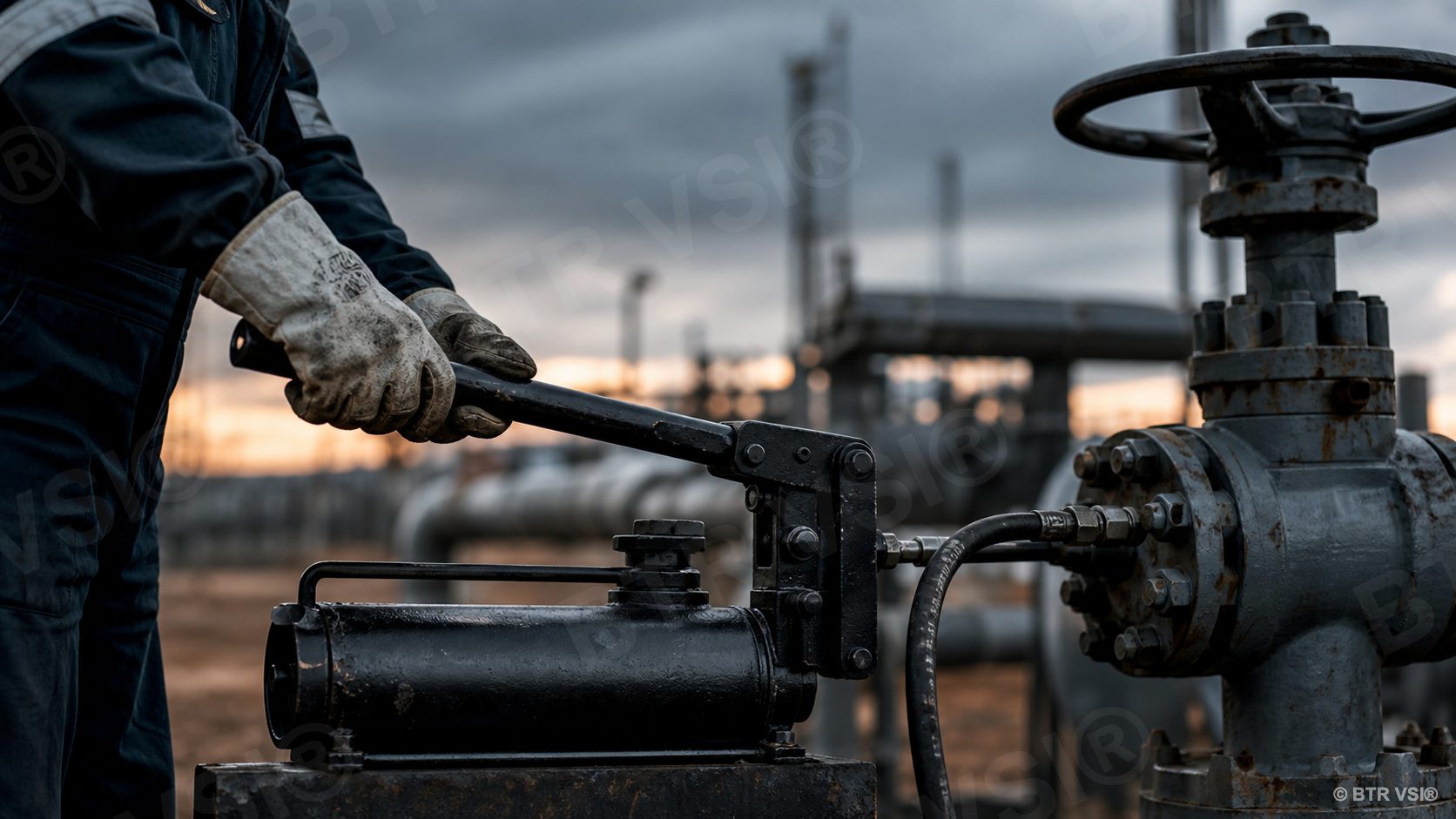
For offshore and remote sites, choose injection equipment you can carry, power and repair on location: a hydraulic hand gun needs no air, while an air-operated gun or pneumatic pump suits repeated work where plant air exists. Carry fittings, adapters and service kits, because resupply takes days, not hours. Match the gun to the valve count and the air available before mobilising.
Knowledge · Injection equipment
Injection equipment for offshore and remote sites: weight, air and logistics
Weight, air supply and spares decide whether an offshore sealant gun works on arrival.
1. Plan around the mobilisation constraint
Everything on an offshore platform or a remote station arrives by vessel, helicopter or a long supply line. Weight and volume cost money at every step, from packing to lifting to stowage. Plan the kit around what the crew can actually move and store.
Our field teams travel worldwide from India, and they pack against the same limits. Three questions shape the choice. How many valves need treatment across the whole trip? Who carries the kit from the store to each valve? What dry storage exists for tools between jobs?
- Count the valves, list the fitting types, and estimate product volumes for the trip.
- Check what each crew member can carry, plus any lifting or deck limits.
- Confirm dry stowage, because salt and damp air attack idle tools.
For the wider decision between guns and pumps, see our injection equipment buying guide.
2. Air supply decides the gun
Injection guns divide into two families, and air decides between them. A hydraulic hand gun works anywhere a person can stand, because hand power provides the pressure. An air-operated gun or a pneumatic pump needs a compressed air supply of suitable pressure and volume.
The BTR 550D air-operated gun delivers 10,000 PSI through a double-acting piston with a 100:1 ratio. It ships at 63 lbs, a figure worth noting when the gun travels by vessel and is then carried by hand. A pneumatic pump system with a stroke counter suits larger programmes where dose control matters.
Check the air supply before you commit to air-driven tools. Offshore platforms usually run instrument air, but a remote pipeline station may have none at all. Compare both routes in choosing injection equipment by pressure, volume and field constraints.
3. Fittings, adapters and consumables
The gun is only one part of the kit. Every valve needs a sound connection, so fittings deserve equal planning effort. Injection is possible only through fittings in good condition, on valve designs that suit it, with site rules and the permit-to-work in place. Where OEM documents exist, consult them for limits and warranty terms.
Offshore and remote stocks often mix valve brands and ages, so fitting threads and buttonhead sizes vary. A missing adapter stops the job as surely as a broken gun.
- Survey the fittings on every valve planned for treatment, and record each type.
- Pack adapters for every type found, with spares for worn or damaged threads.
- Carry spare buttonhead fittings and caps, because damaged ones cannot be repaired on site.
For ports you do not recognise, follow the adapter selection workflow.
4. Spares and service kits
A sealant gun that fails offshore waits days for a replacement, if a courier serves the site at all. The answer is to hold spares before departure, not to hope. Each gun model has a minor service kit for routine seal wear and a major kit for a full rebuild.
Pack a set of kits for every gun you mobilise, not one shared set. Train at least one crew member to strip and rebuild the gun on site. A gun leaking pressure past its piston wastes product and slows every injection. Check every kit against its contents list before the crate is sealed.
Our guide to spares to hold for injection equipment lists what to carry. We also repair injection equipment and can advise on kit contents for each gun model.
5. Check everything before the kit ships
Salt air, motion and damp stowage attack tools between trips. Inspect every item before departure and record its condition, so a worn hose is caught in the workshop rather than on the platform. Our inspection log for injection equipment offers a simple format. A written record also supports handover between crews.
Plan product as carefully as tools. Estimate cleaner, lubricant and sealant from the valve count, and add margin for neglected valves. Injection itself stays controlled throughout: defined amounts, within equipment and fitting ratings, watching the pressure response, with a stop if the response looks wrong.
Treat any early improvement as screening evidence only. The confirming step for a passing valve is a seat-leak test under agreed conditions, such as pressure decay across the closed valve. For site-wide planning, see offshore valve maintenance: salt, space and logistics.
Common questions
Offshore sealant guns questions, answered directly
Can a sealant gun work offshore without an air supply?
Yes. A hydraulic hand gun develops injection pressure by hand alone, so it works on sites with no compressed air. Air-operated guns and pneumatic pumps need a suitable air line, so confirm the supply before mobilising one.
How heavy is offshore injection equipment?
It depends on the tool. Our air-operated gun ships at 63 lbs with its packing, and hand guns are lighter. Weight matters when crews carry the kit by hand, so check carrying limits before you choose.
What spares should I hold for injection equipment offshore?
Hold a minor and a major service kit for each gun you mobilise, plus adapters, spare fittings and caps. Resupply to an offshore or remote site takes days, so a failed seal should never end the job.
Is a hand gun or a pneumatic pump better offshore?
Neither is better in every case. Choose a hand gun for small valve counts and sites without air. Choose an air-operated gun or pump for repeated work where instrument air exists and dose control helps.
Mobilising injection equipment offshore?
Send the valve list and site details. An engineer replies within 24 hours.
Include valve count, fitting types, air availability, site location and mobilisation dates, and we will suggest a kit.